Building the Field of Philanthropy and Gender Justice in Latin America and the Caribbean
September 29, 2022
We Share the Lessons Learned from Active Communities
October 26, 2022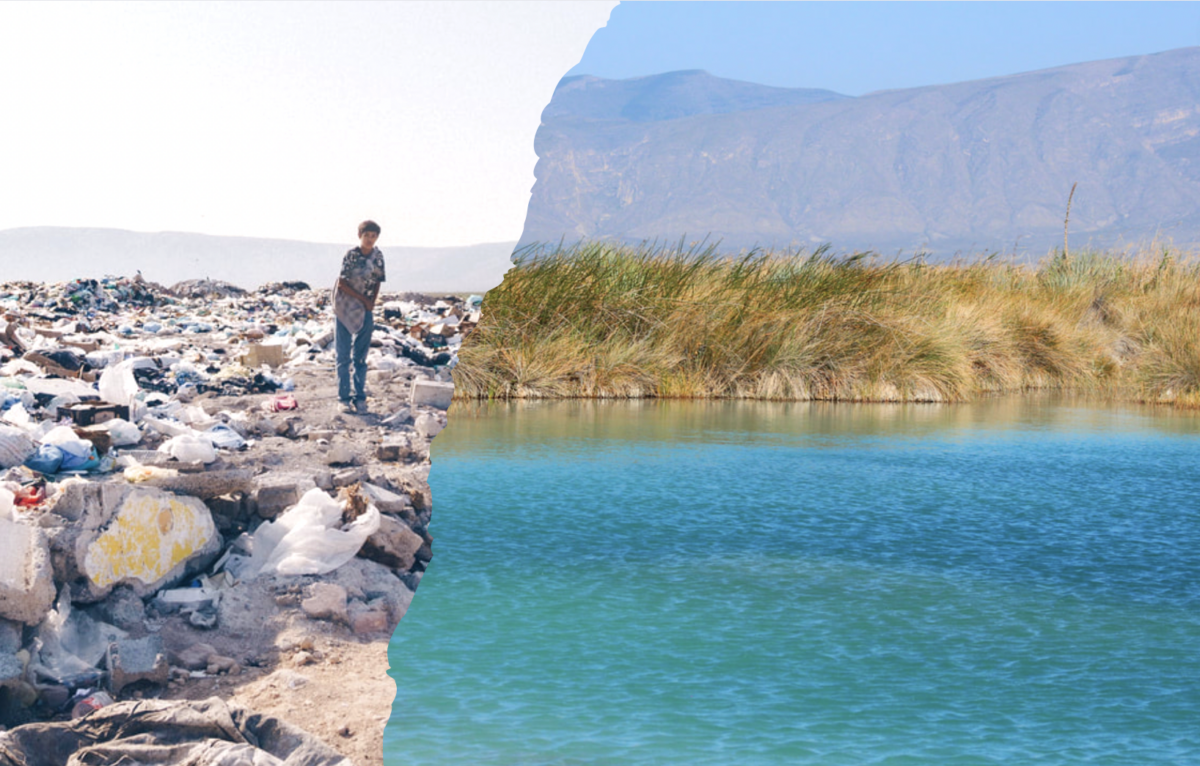
Pamela Cruz, Special Projects Coordinator at Comunalia.
As we contribute to sustainable development from within our communities, we know that while the 2030 Agenda calls for universal implementation, it also recognizes differing capacities and takes into account the priorities, public policies, realities, and levels of development of each country, region, and local community. This is why it is essential to plan, take action, and measure the progress of our contributions.
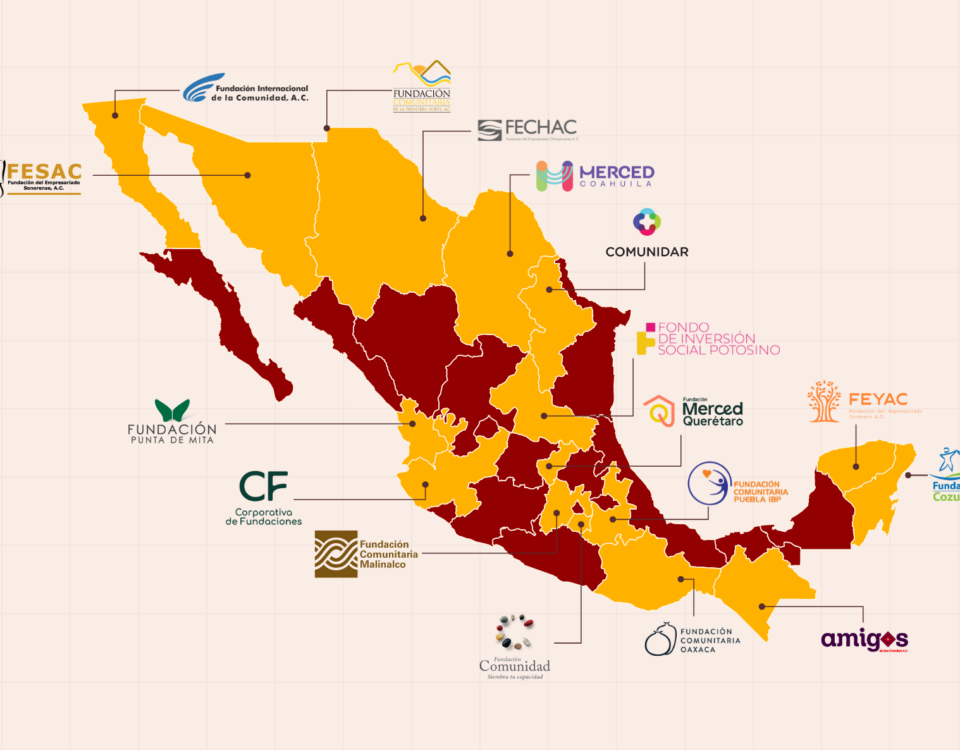
In this regard, community foundations—which have developed extensive experience in identifying, understanding, and seeking joint solutions to the social complexities of our communities—launched the initiative Building a Sustainable Future with Community Foundations in Mexico, a collaboration between Comunalia and the C.S. Mott Foundation.
As part of an initiative running parallel to our project, we are launching the #ODSenPráctica, spaces for reflection and sharing best practices regarding the contributions we make as organized civil society in Mexico. In one of these eight sessions, we spoke with Lourdes Vargas, Director of Institutional Development, and Atena Salgado, a member of the Environmental Education team, about the "Limpiemos Cuatro Ciénegas," run by Proyecto ConcentrArte A.C.
Let's Clean Up Cuatrociénegashas an educational approach that fosters a culture of environmental stewardship in this protected natural area, while also promoting advocacy efforts to influence public policy on waste management. Through this project, we seek to create local solutions that ensure the reduction of solid waste, as well as its proper management and reuse through sorting and reintegration into the economic cycle.
ConcentrArte’s working model seeks to foster deep connections with people and community development; it views people as rights-holders and agents of change, promoting a culture of peace and empathy focused on the common good. The intervention process begins with a participatory assessment, fostering community engagement across all sectors; this is followed by project implementation, monitoring of community processes, and evaluation of impact and social improvement.
In this way, community members reduce the negative impact of tourism on this “magical town,” while efforts are also focused on the younger generations through an eco-educational program aimed at children, adolescents, and young people between the ages of 6 and 18—including students in elementary, middle, and high school.
To date, through "Limpiemos Cuatro Ciénega", 5,013 participants have benefited directly, and 1,200 local residents have benefited indirectly. These residents have identified the current problem of poor urban solid waste management, as well as the importance of making substantial changes now to ensure a sustainable future.
ConcentrArte’s efforts in Cuatro Ciénegas and the community primarily contribute to SDG 11, specifically to target 11.4: Strengthen efforts to protect and safeguard the world’s cultural and natural heritage.
Its actions also have a positive impact on the goals of the 2030 Agenda: 4—Quality Education; 13—Climate Action; and 17—Partnerships for the Goals, with a focus on promoting education to advance environmental justice and the right to a healthy environment.
Measuring ensures development in our communities
Measuring strengthens accountability mechanisms, enables the establishment of continuous improvement processes, contributes to the efficient allocation of resources, and promotes evidence-based decision-making, both for the public sector and for civil society organizations.
However, measurement goes beyond simply tracking the progress or impact of our initiatives in the immediate local community; this process begins with planning, according to Meng-Ping Hsu, a public policy analyst at the Nuevo León Council, who participated in our #SDGsInPractice under the theme Moving Toward Global Goals: How to Measure.
Incorporating measurement mechanisms from the planning stage helps define how the process will be carried out, who will monitor it, and when a review and evaluation will take place. This undoubtedly enables long-term continuous improvement processes, provides a clear path forward that motivates team members, ensures transparency in budget allocation, and ensures accountability to both donors and project beneficiaries. Documenting best practices allows us to build a case for expanding scope and resources when necessary, and to ensure that the project’s purpose is being fulfilled.
Set achievable and relevant goals
Meng-Ping Hsu recommends designing objectives and strategies with SMART components: measurable, specific, achievable, relevant, and time-bound; regarding this last point, set concrete goals and the timeframe within which they will be achieved (Doran, 1981).
A Shared Vision for the 2030 Agenda
Identifying, from the planning stage, how our efforts align with the 2030 Agenda allows us to see how our actions contribute to and complement the major global goals, and helps prevent duplication among plans or programs. In this regard, the Nuevo León Council proposes complementary visions that contribute to existing initiatives and build partnerships to advance toward more just, equitable, and sustainable development for all people.
After defining the framework, it is important to identify the means or sources of verification for generating information—such as INEGI, UNDP, and CONEVAL—which are free of charge and help establish methodological frameworks that allow for the replication of measurements. Another source would be to collect information through surveys or to use administrative records, such as attendance lists, that can be transformed into indicators.
As part of the planning process, disaggregating data helps highlight inequalities so that we can respond to the 2030 Agenda’s call to leave no one behind—with a focus on human rights and gender. In other words, it places people’s needs, rights, and capabilities at the center by recognizing situations of vulnerability—sociocultural, geographic, institutional, socioeconomic, and environmental.
Organize the information
The next step is to organize the information and adapt it into formats that allow it to be transformed into more specific products. One recommendation is to build a database in clean formats (TIDY) to organize and standardize data entry, thereby enabling the analysis of that information. The suggestion is to include in each cell an identifier number, the year of the survey, the entity, the entity code, and the specific value of the information.
It is also essential to have metadata to identify the characteristics of the data, such as frequency, planning tools, level of disaggregation, sources, links, units of measurement, data interpretation, and methodological notes, to name a few. This measure ensures the sustainability, organization, and continuity of these efforts.
How can we develop relevant indicators?
The Nuevo León Council suggests identifying the focus of the measurement. This means clarifying where we are in the process—whether we are trying to measure the final results or making the process more efficient to meet our goals. In this step, strategic indicators are combined with management indicators.
To incorporate quality criteria, it is advisable to filter the indicators to ensure that they represent efforts that truly contribute to our work. Following the recommendations of the United Nations, it is always advisable to prioritize Level 1 indicators, for which there is a well-defined methodology and publicly available, accessible data. When encountering Level 2 indicators—for which there is insufficient or inaccessible data—one may opt for other alternatives that follow the RACER model. This model prioritizes indicators that are relevant to the objectives, accepted by key stakeholders, credible and easy to interpret, easily monitorable, and based on available or statistically valid data.
One recommendation is to establish a range of goals rather than a specific goal, because this approach acknowledges that, within the framework of action, social, economic, political, and environmental circumstances are constantly changing; therefore, setting realistic goals requires two types of scenarios: a conservative one and an optimistic one. This will provide flexibility in interpreting performance, enabling decision-makers to improve their actions.
Share the results and make information more widely accessible
Once the cycle is complete—from planning, defining indicators and goals, to interpreting results—the final step is communication. In this phase, efforts focus on sharing the results by promoting open data and accessible analysis.
The Nuevo León Council recommends the use of monitoring tools or platforms that democratize access to public policy processes and outcomes to ensure transparency of information, meet goals, and thereby strengthen accountability. For this to happen, it is essential to have tools that enable constant monitoring using open data, provide frequent reports with analysis and interpretation of results, and share key findings through executive summaries and social media posts targeted at various audiences—ranging from highly specialized groups to the general public and the local community.
– – – –
Image courtesy of ConcentrArte A.C.