Promoting Donation-Based Crowdfunding in Mexico: The HIPGive Experience
September 9, 2020
Comunalia Participates in the 2020 Concordia Annual Summit
September 26, 2020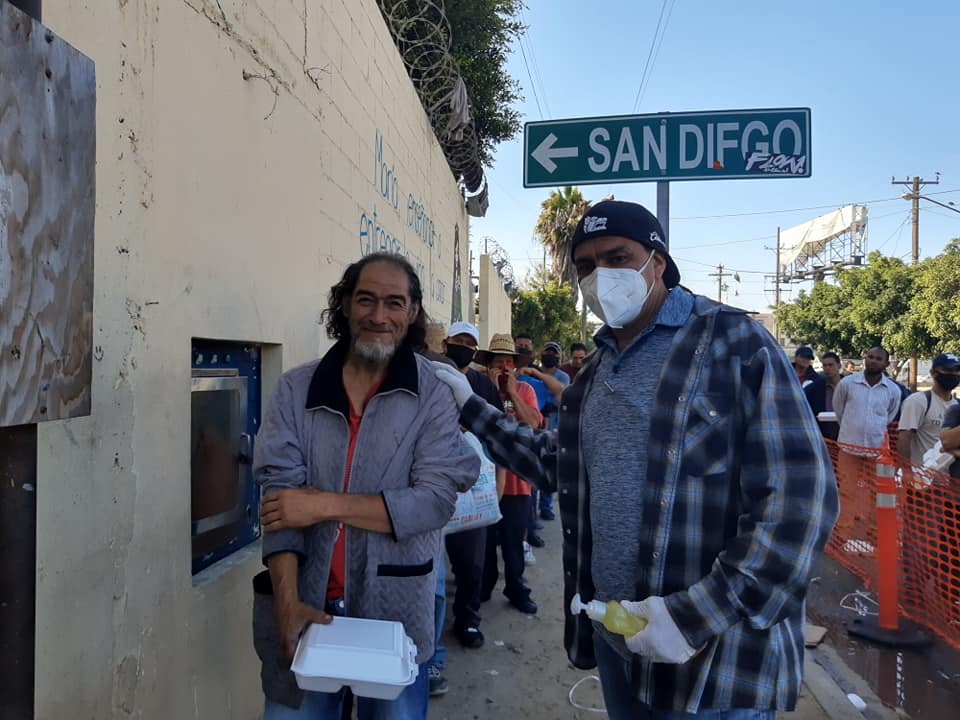
The effects of the COVID-19 health crisis have widened social disparities, and helping to meet the most pressing basic needs to cope with the pandemic is essential. That is why Comunalia and the Coca-Cola Foundation, through the first phase of the Active Communities Fund, are helping to ensure that humanitarian aid continues to reach the most affected communities.
Through the work of the Alliance’s community foundations, members of organized civil society, and grassroots groups, the Active Communities Fund has been promoting the country’s social and economic recovery since August by supporting 41 social initiatives.
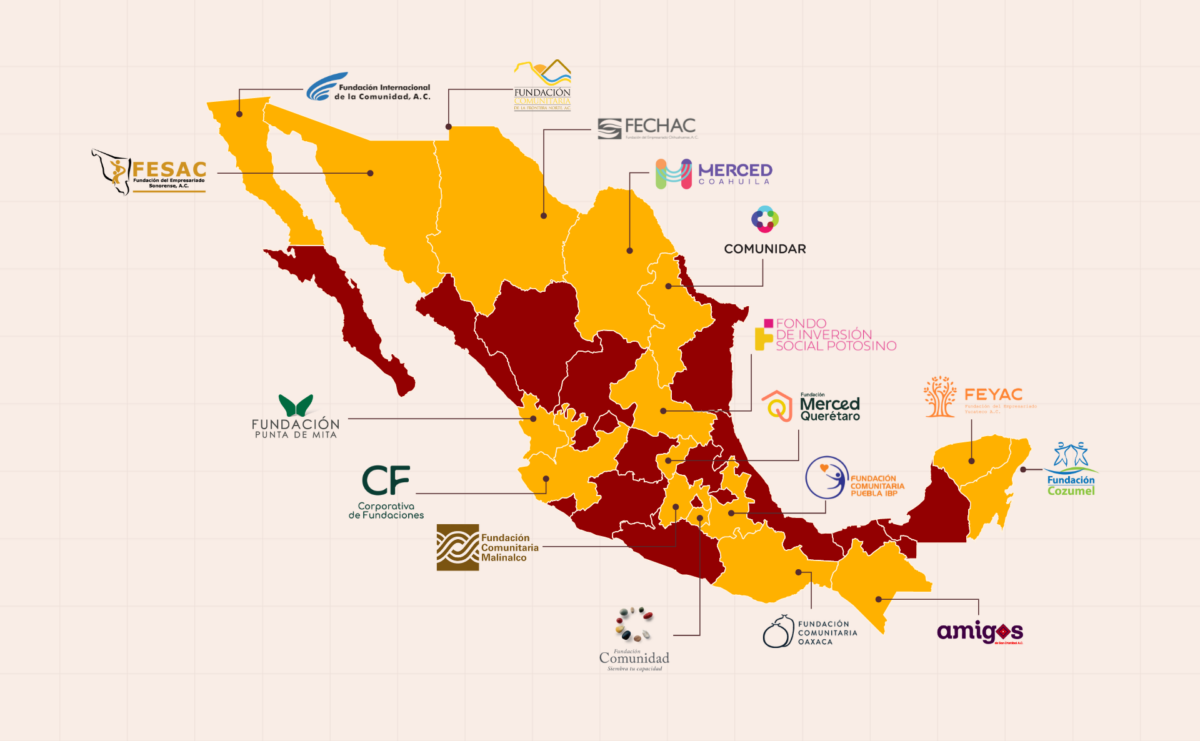
In the area of humanitarian aid, the Active Communities Fund supports a total of 11 projects focused on this cause, so that these initiatives can continue to address the most urgent needs of the population in the states of Nuevo León, Jalisco, Quintana Roo, Chihuahua, Sonora, Nayarit, Oaxaca, Baja California, and Querétaro.
Learn about the 11 humanitarian aid projects that have been selected to receive funding from the Active Communities Fund to help address this crisis in Mexico:
#AbrazaNL by Fundación Comunidar in Nuevo León.
#AbrazaNL is an initiative that benefits 17,000 families in the Monterrey metropolitan area who have lost or seen a drastic reduction in their income due to the pandemic. Each family that applies for assistance receives 3,000 pesos via a solidarity card that they can redeem for food and/or medicine. Through #AbrazaNL, 68,000 people are expected to receive these benefits.
Strategies for Supporting Highly Marginalized Children and Their Families in Guadalajara During the COVID-19 Pandemic, by Fundación Mayama A.C. in Jalisco.
Fundación Mayama A.C., in Guadalajara, is ensuring the continuity of its Comprehensive Plan to continue supporting the most vulnerable families during this crisis and meet their basic food needs. This project serves 826 people living in extreme poverty, including 212 children at the Day Center and 614 members of 148 families.
To prevent malnutrition and contribute to the health and well-being of vulnerable children, adolescents, and their families during the COVID-19 crisis, through the Movement to Support Abandoned Minors (MAMÁ A.C.) in Jalisco.
This initiative by MAMÁ A.C. serves children and adolescents in socially vulnerable situations who engage in informal street work, as well as their families, through food assistance in neighborhoods; informational sessions on COVID-19 prevention; and the development and implementation of health protocols.
The program benefits 25 families enrolled in the Child Labor Program, including 51 children and adolescents and their 83 family members—a total of 134 people.
"Cooking Up Love" by the Cozumel Rotary Club in Quintana Roo.
In the Mexican Caribbean, the Cozumel Rotary Club participated in a call for proposals from the Cozumel Foundation to implement this project, which aims to provide food assistance to more than 600 families affected by the decline in tourism on the island. The initiative will operate six community kitchens for four months to provide nearly 1,600 meals daily in Cozumel’s most marginalized areas, where 90% of the population depends on visitors.
Safe Reopening and Empowerment of UIMAC Child Care Centers in Chihuahua.
This project is reopening five of the association’s childcare centers to support 226 families in Ciudad Juárez. Through this initiative, funds are being allocated to restore services at the centers that provide childcare for the children of mothers working in the maquiladora industry.
Thanks to this initiative, a total of 190 mothers are able to continue working, while at the same time ensuring an income for the 31 employees at the childcare centers and providing meals for the workers’ children. The Fundación Comunitaria de la Frontera Norte A.C. was responsible for issuing the call for proposals to local organizations.
Solidarity Communities of Fundación Comunitaria Oaxaca A.C. in Oaxaca.Fundación Comunitaria Oaxaca A.C. helps 700 people in four communities in the Mixteca region by providing support to families and small local businesses. The project offers beneficiaries solidarity vouchers that they can use to purchase food and/or supplies from local merchants. This contributes to the community’s well-being while also promoting economic recovery.
The initiative is expected to support 200 families and 15 small-scale producers and/or merchants in the region.
Humanitarian Aid for Vallarta and Banderas Bay from the Desayunos para los Niños de Vallarta A.C. Foundation in Jalisco and Nayarit.
The initiative provides breakfasts to 325 people from 150 underprivileged families in the neighborhoods of San José Del Valle, Valle, Cartolandia, El Porvenir, Mezcales, Mojoneras, and Magisterio, whose already low incomes have been further reduced as a result of the pandemic.
The Active Communities Fund will provide resources to ensure that humanitarian work continues despite the decline in financial and in-kind contributions caused by the pandemic. The Desayunos para los Niños de Vallarta A.C. Foundation participated in the local call for proposals issued by the Punta de Mita Foundation.
Initiative to Address Food Insecurity During the COVID-19 Pandemic by the Fundación del Empresariado Sonorense A.C. and Partners in Sonora.
The project aims to reduce food insecurity in three municipalities in Sonora (Hermosillo, Ciudad Obregón, and Nogales) by supporting civil society organizations that have been successfully addressing this issue for years. It is estimated that more than 6,300 people living in extreme poverty and working in the informal economy—most of whom are women—will benefit from the project.
In Ciudad Obregón, supplies will be purchased exclusively from local vendors, and distribution will be supported by Canaco and the Sonora Community Network. In Nogales, the food needs of the new members of the Nogales Food Bank will be met. In Hermosillo, a partnership was formed with the Hermosillo Food Bank to direct resources to indigenous communities.
Addressing the needs of minorities within the minority community at the CSER A.C. Service Center in Baja California.
To address the needs of minorities within a minority group, they will provide basic food baskets, STD risk-reduction kits, and COVID-19 kits to 40 adult women living with HIV, sex workers, and members of the LGBT community, in order to prevent them from going out onto the streets in search of these supplies and potentially contracting the coronavirus.
The initiative aims to protect a high-risk population whose adult members have low incomes, are traditionally marginalized, and face difficulties accessing employment and education. The Fundación Internacional de la Comunidad A.C. was responsible for launching the local call for applications in Baja California.
Fund for food at the Salesian breakfast center due to COVID-19, organized by Proyecto Salesiano Tijuana A.C. in Baja California.
The initiative will help cover the expenses of the association’s six centers, which must continue operating to serve 1,900 Tijuana residents—including children, adolescents, young adults, homeless men and women, migrants, and/or people living in poverty—whose numbers have increased as a result of the health crisis. The fund will help purchase necessary supplies such as food, hygiene items, and protective gear against the virus.
At the same time, to implement a strategy to seek out new donors, supporters, and volunteers to ensure the organization’s continued operation, Proyecto Salesiano Tijuana participated in the local call for proposals launched by Fundación Internacional de Comunidad A.C.
For better living conditions and the holistic development of families in El Salitre, supported by Cáritas de Querétaro I.A.P. in Querétaro.
Caritas de Querétaro I.A.P. aims to help 50 families from six neighborhoods in the El Salitre area strengthen their personal, family, and community capacities to cope with the pandemic in terms of food, health, and water. In total, 188 people will benefit from health clinics, food pantry distributions (two at the start and one more halfway through the project), training in food cultivation, and technical training on building cisterns for rainwater harvesting.
The Merced Querétaro Foundation led the call for proposals for local organizations in the state.
Photo credit: Padre Chava Salesian Breakfast Center, Tijuana, B.C.