
How Are Nonprofits Adapting to COVID-19?
May 24, 2020
At Comunalia, we do it for you and for Mexico
June 8, 2020
Monterrey, Nuevo León, June 1, 2020.— In Mexico, the health crisis caused by COVID-19—and its economic and social impacts—is being addressed with innovative and creative solutions by members of organized civil society working on behalf of the most vulnerable populations across the country.
Although the social sector is one of the hardest-hit, with a drastic decline in its revenue and donations, it continues to set an example of resilience and collaboration by placing the common good at the center of its objectives to strengthen efforts in support of public health, food security, and economic recovery projects.
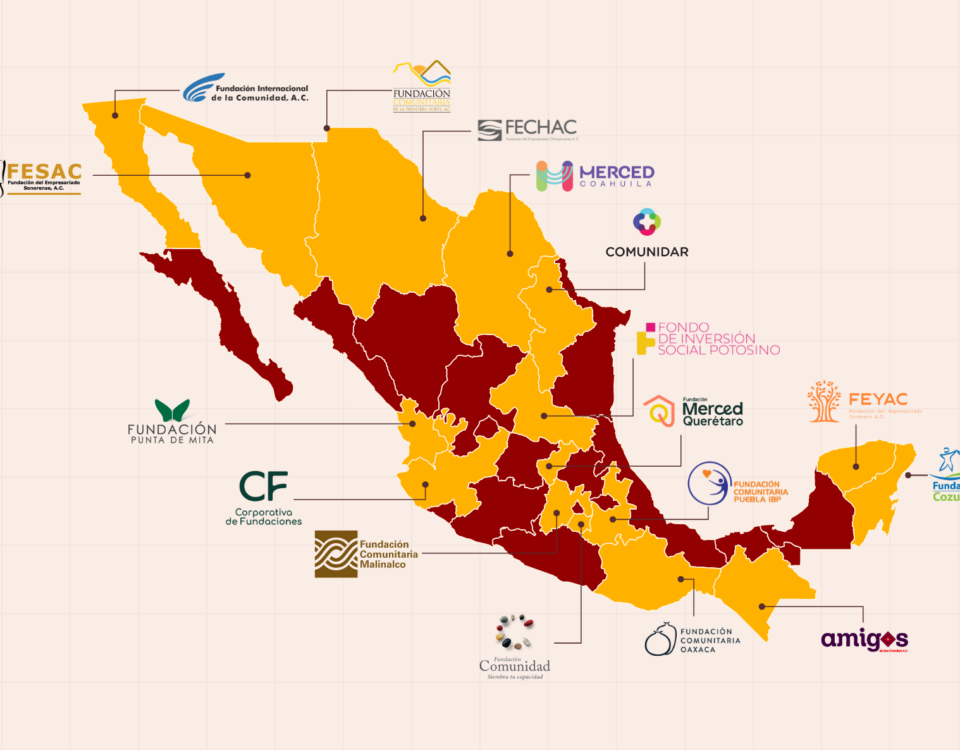
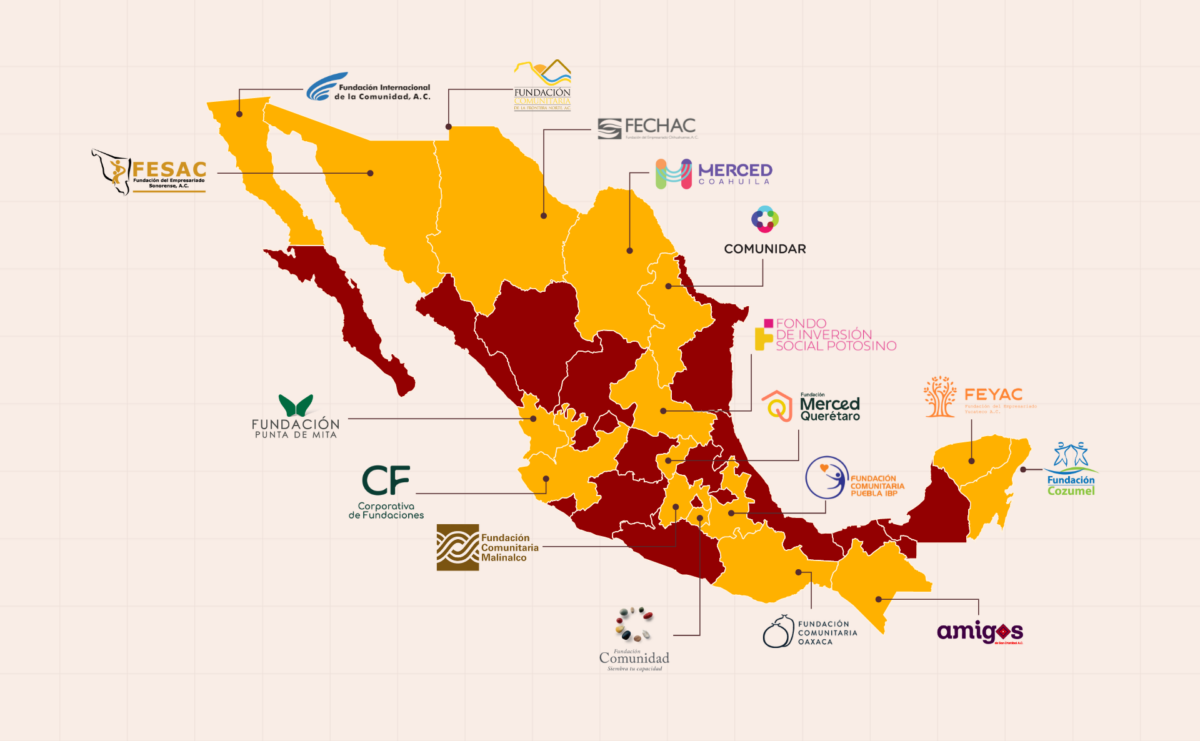
At Comunalia, we have compiled a list of 10 projects and initiatives currently being implemented by both our partner community foundations and other members of organized civil society during this time. Check out their efforts and share them:
1. Working together in a spirit of mutual support.
Fundación Comunidad AC, in partnership with the Morelos Food Bank and civil society organizations in Morelos, has launched the initiative Bank of Goodwill to deliver complete food baskets to the communities and families that have been hardest hit by this health and economic crisis. Additionally, Fundación Comunidad AC promotes the consumption of locally produced goods and supports women producers in the state of Morelos.
2. Find new ways to reach people.
In light of the current COVID-19 crisis, millions of vulnerable Mexican families need humanitarian aid. And while it is essential to meet their basic needs, during this period of isolation it is also crucial to focus on the emotional and developmental needs of infants and children in the medium and long term. Thus, the Pact for Early Childhood launched the JUEGA Kits, a playful tool designed to help alleviate stress and provide emotional support through play. At this stage, at least 50,000 families will benefit from this initiative.
3. Digital Transformation of the Value Proposition.
The challenges posed by physical distancing have been met with the innovative solutions that Fundación Merced Querétaro has developed by offering digital services to strengthen civic organizations and initiatives. As a result, its value proposition remains as relevant as ever through virtual training sessions, consulting services, and discussion forums. In addition to professionalization, its focus on coordinating organized civil society and social investment continues to be key factors that allow the Merced Querétaro Foundation to keep its objectives as relevant as they were before the pandemic.
4. Show empathy toward the team.
Comunalia has just joined the collaborative initiative #WeDoItForMexico, in partnership with the Social Value Institute, Deriva, Ecoagency, Valores para el Tercer Milenio, and Fundación Gentera, to address the mental health needs of staff members at its community foundations across Mexico, who are providing immediate support in response to the crisis. Comunalia believes that emotional overload, the system’s limited capacity, long workdays, contact with vulnerable groups at risk, and personal challenges create a latent risk of anxiety and post-traumatic stress. That is why this project’s primary goal is to foster empathy.
5. Find new ways of operating.
To raise awareness of the organizations it supports and strengthens, Amigos de San Cristóbal AC, in Chiapas, organized a series of webinars to showcase the work and impact of its Partner Organizations with the goal of encouraging more people to support civic causes amid the health and economic crisis. Each week, they feature a different organization; the only requirement is to register in advance to access the Zoom session.
6. Be flexible with the communities.
The current emergency has impacted the development and continuity of many programs in the civil society sector. Despite this, the Oaxaca Community Foundation rose to the challenge by offering flexibility in its scholarship program, which it continues to implement without losing sight of its mission. For the 2019–2020 school year, its Community Scholarships Programprogram, in partnership with Bécalos, is benefiting 155 high school students in six regions of Oaxaca, enabling them to continue their studies.
7. Create a crisis management team.
In response to the COVID-19 crisis, businesswomen, businessmen, and employers in Chihuahua, through the Chihuahua Business Foundation (FECHAC) strengthened their collaboration with authorities and social initiatives through a state crisis response committee, having allocated a total of 37 million pesos through May to purchase medical supplies and equipment for hospitals, clinics, and health centers in various municipalities, as well as to provide food pantries and food assistance to vulnerable families.
8. Advocate on behalf of the sector to mitigate the negative effects of the crisis.
In Jalisco, Corporativa de Fundaciones and other civil society organizations have been engaging in dialogue with the state government to ensure that organized civil society, along with micro and small businesses, is included in all economic recovery and support plans and funds being implemented by the local government. These efforts aim to prevent the disappearance of thousands of organizations that have been severely impacted by the crisis.
9. Listening and showing empathy.
Now that we’ve gotten past the critical phase of this pandemic, the hardest part lies ahead—that’s why this initiative was launched in the last few weeks of April We Need to Listen to Each Other was launched in the last weeks of April. Through this initiative, 65 civil society organizations, collectives, activists, and journalists have created spaces and channels for dialogue to place the growing inequality during the COVID-19 crisis at the center of the discussion. A movement was launched inviting the general public—and particularly those most affected by the crisis—to share messages about their reality, their needs, and their proposals for overcoming the crisis. These messages were then shared on social media and in the news using the hashtag #NecesitamosEscucharnos.
10. Build a movement of solidarity.
In Nuevo León, the Comunidar Foundation has brought together the charitable efforts of the community, the business sector, and the government to support the public and private healthcare systems, assist vulnerable individuals who have recently lost their jobs, and help restore employment opportunities through the movement Unir y Dar, an initiative being carried out in three phases. The first is called #RespiraNL and involves more than 100 volunteers donating supplementary medical equipment—such as splitters, oxygen concentrator valves, and protective gear—to hospitals. The second phase is called #AbrazaNL and provides temporary assistance to people who have lost their jobs and were earning less than 10,000 pesos a month. The third phase is #ReactivaNL and will contribute to the recovery of jobs that have been lost or are at risk, as well as to the revitalization of the local economy.
At Comunalia, we hope these innovative examples will serve as inspiration or provide insights for your organization to implement similar initiatives. If you’d like to learn more about these initiatives or share an example of your own, please feel free to contact us at contacto@comunalia.org.mx
Image credit: pix abay.com