We are celebrating 10 years of building partnerships to strengthen our communities
October 21, 2021
Thriving as a Community: Comunalia Turns 10
November 11, 2021
A conversation between Tatiana Fraga Diez and the Global Fund for Community Foundations, as Comunalia celebrates its tenth anniversary.
Starting a new job as Executive Director of an organization can be daunting at any time, and it likely comes with its own set of challenges in the midst of a pandemic. On June 1, 2021, Tatiana Fraga Diez took on that role at Comunalia—the Alliance of Community Foundations in Mexico, which seeks to empower citizens through the Mexican community foundation model. Today, five months after taking office, the GFCF spoke with Tatiana to discuss Comunalia’s work shortly before the celebrations marking its tenth anniversary. We spoke with her about how the community philanthropy sector in Mexico has carried out its work during the COVID-19 pandemic, where it is headed, and what it feels like to take on a new responsibility while working from home at the same time.
GFCF: What is the current state of the community foundation/community philanthropy sector in Mexico?
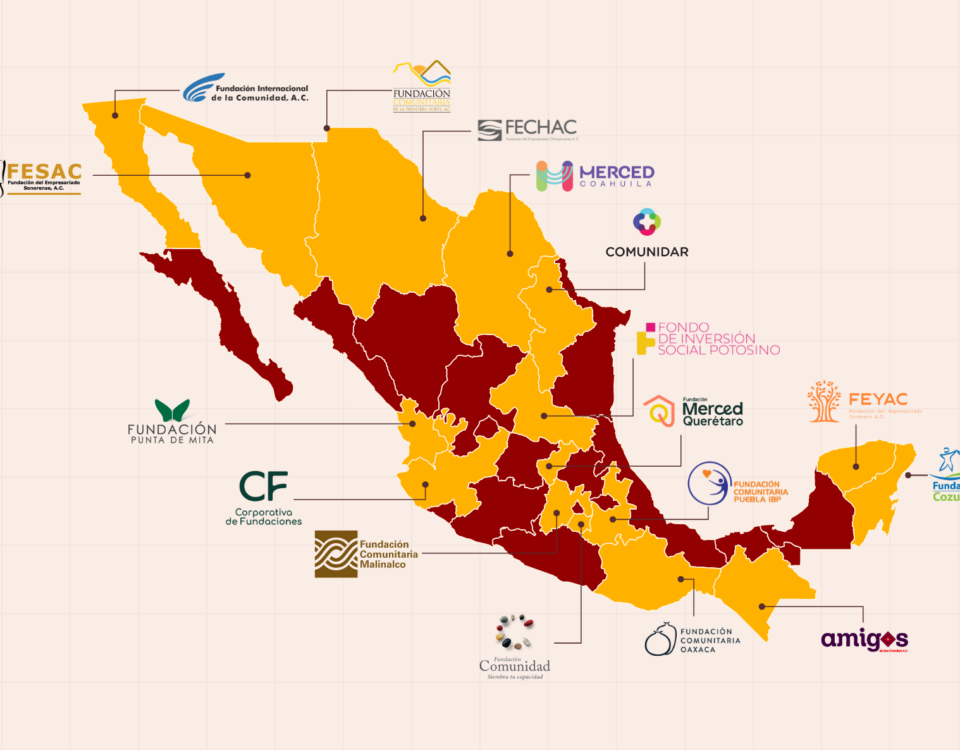
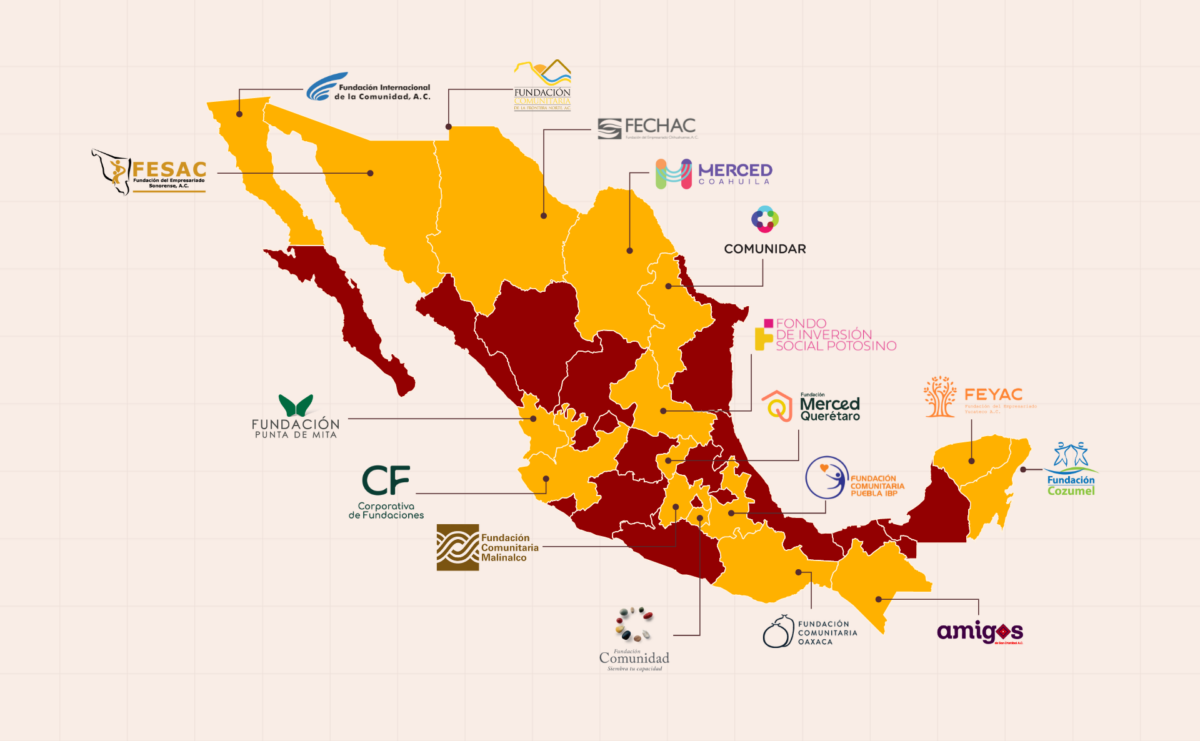
 Tatiana Fraga Diez (TFD): Before we begin, I have to be completely honest with you: I’m new to all of this! I’ve worked in the nonprofit sector for a long time, but I’m new to the field of community philanthropy. However, for now, I’m really enjoying learning about this field. I’ve learned that community foundations are just one part of the community philanthropy sector in Mexico, which is extremely diverse. The first community foundation in Mexico was established in the 1990s, but the sector really began to flourish in the early 2000s. There are community foundations in half of the country’s states, although, overall, the movement has stopped growing. This is something Comunalia seeks to address by working with other groups and partners interested in exploring community foundations as a vehicle for local philanthropy.
I should point out that Mexicans are extremely generous people. Especially when a tragedy strikes, people step up. In fact, the Mexican nonprofit sector began to flourish after the 1985 earthquake. However, we are not in the habit of donating regularly to social causes, and donations are made primarily to churches or directly to charitable causes through organizations such as the Red Cross. Community foundations in Mexico are increasingly interested in how to harness this existing generosity and how to mobilize local resources to support a wider range of causes.
GFCF: Has anything changed for the sector in the wake of the COVID-19 pandemic? Has it led to new insights, roles, challenges, opportunities, knowledge, etc.?
TFD: The pandemic certainly had an impact, both on our members and on Comunalia itself. Together with other donors and supporting organizations, we launched a survey to understand local responses to the pandemic. Overall, the results demonstrated the sector’s resilience: community foundations were extremely flexible in responding to the crisis, meeting community needs, and adapting to changing circumstances. However, at the same time, many organizations lost staff due to funding challenges. Another challenge for Mexican community foundations was the transition to remote work; specifically, how to continue engaging with communities that might not have the technology or tools to connect online, without putting anyone at physical risk.
Since Comunalia is a national network, we had more experience working remotely and had often relied on technology to connect our members virtually. In fact, during the pandemic, we ended up bringing our members together more frequently than before. We also saw that members of our network trusted one another and discovered that peer-learning sessions increased. To support our network, in partnership with the Coca-Cola Foundation, the Charles Stewart Mott Foundation, and the Inter-American Foundation, we established the Active Communities Fund to promote Mexico’s economic and social recovery following COVID-19. This initiative has involved two funding rounds. Initially, grants were awarded to address the urgent needs of communities, while the current round supports longer-term local development initiatives. The program also includes a learning component, and participating foundations decide which topics to discuss with their peers. For example, many community foundations were highly effective at harnessing local generosity and donations during the pandemic, but how can this be sustained in the future, and what can we learn from one another in this regard?
GFCF: In terms of #ShiftThePower, what resonates most with you in the Mexican context?
TFD: One of the reasons I decided to join Comunalia was because, in my experience, power imbalances are very prevalent in the philanthropic sector. Some of the sector’s working practices set us up for failure, and we often find ourselves trying to solve problems created by those who invest in our organizations and initiatives. At Comunalia, to begin addressing issues related to power, we are developing participatory approaches. For example, our members are our primary decision-making body, and our activities are driven entirely by their needs and interests.
Also, in terms of power shifts, a key focus for us is encouraging community foundations to better understand and value the resources that already exist in communities. Arrecife, a Mexican network of community-based philanthropic organizations, is conducting research to explore how to better account for the resources (financial and otherwise) contributed by communities, while recognizing that there must be a balance between external resources and those contributed by communities. Fondo Acción Solidaria A.C. (FASOL) is leading this work and will present the findings as part of our anniversary events next month. It’s a very important conversation.
A particular challenge for the sector in Mexico is that the civic environment for philanthropy has become more restrictive year after year. In 2020, a new law was introduced that makes it virtually impossible to provide financial support to organizations and groups that are not formally registered. This is a huge problem for community foundations, which, in the past, have supported informal groups, movements, and collectives. There are ways to get around this problem: donating in kind, providing other forms of support, organizing direct cash transfers through apps like Venmo, and so on. However, groups always need a certain amount of money to survive, which poses an ongoing challenge if the goal is to transfer resources—and power—to the grassroots.
GFCF: Can you point to any interesting or inspiring examples of Mexican community foundations or community-based philanthropic organizations that are driving change at the local level?
TFD: I think the work of Amigos de San Cristóbal, A.C., related to the donation circles is truly exciting, as it is deliberately inclusive. They have six giving circles that reflect the diversity of the San Cristóbal community and bring together indigenous groups, foreigners with roots in the region, local residents, and others. They use these circles not only as a way to raise funds but, more importantly, to engage with the community and forge new connections. They’ve only just begun this work, but I’m excited about the direction it’s taking.
Another example is Comunidar in Monterrey. They have developed truly interesting ways of engaging with the local government, and that is important, since connecting the social sector with the government is a vital bridging role that community foundations can play. To contribute to Nuevo León’s economic and social recovery during the pandemic, Comunidar partnered with the local government on three fronts: providing emergency assistance (food, shelter, cash, etc.) to the most vulnerable people; offering low-interest loans to small businesses so they could survive; and ensuring that students from less privileged backgrounds had access to computers and the Internet for home schooling. Another local initiative in which Comunidar has participated relates to education. After schools had been closed for a year due to the lockdown, it was evident that many were in need of maintenance: some were in poor overall condition, while others had been vandalized or burglarized. Comunidar raised funds from local businesses to improve the schools’ conditions and make them suitable for students once again.
GFCF: You began your role as Executive Director of Comunalia during the COVID-19 pandemic. What was that experience like? Did the external context present any additional challenges?
TFD: It was a whirlwind of change in every way! I wrapped up my last job and started at Comunalia the very next day. It was also strange in a way because I continued working from the same physical space in my home, even though the focus of my work changed completely! My entire hiring process, including the interviews, took place online. But I was lucky enough to work with Comunalia’s former Executive Director, Mariana Sandoval Ulloa, for a month. That transition also took place largely online, although fortunately we met in person once (which involved my first flight in over a year). Mariana was brilliant at bringing me up to speed, and she had also done a lot of work to institutionalize and document Comunalia’s internal processes and ways of working. That has been a huge help.
Although I’ve chatted online with all our members, I feel like I’d get to know them even better if we had the chance to meet in person—especially to understand and get a real sense of their work at the local level. At Comunalia, we’re a small team of three people. Two of us work in Monterrey, so we’ve met up a few times, but our third colleague is in Puerto Vallarta, on the other side of the country. Working remotely as a new team means we have to be very open and clear in all our communications, especially regarding our needs and expectations. During the pandemic, Comunalia’s workload tripled as we managed new funding and supported our network. The work has been extremely demanding, so I’ve tried to take special care to listen to the team and understand how to help them if they’re facing challenges or frustrations.
GFCF: Under ideal circumstances, how do you think the Mexican community foundation sector—or community philanthropy—will evolve over the next ten years?
TFD: One thing we’ll do during the anniversary events in November is imagine the future together. Personally, I’d like to see the knowledge and experience of community philanthropy professionals valued more highly in the future and better leveraged through peer-learning opportunities. All too often, “capacity building” is really just about improving certain mechanisms or structures to attract donors or meet their expectations. As mentioned in the #ShiftThePower Manifesto for Change, we must move away from “capacity building” as something defined by external actors and requirements. There is a tendency to import “best practices” from one place to replicate them in another, but context matters. So, does this model of importing foreign ideas make sense? We should learn from ourselves.
On the other hand, as I said at the beginning of this interview, I would like to see more community foundations in Mexico. Although I also find this issue challenging. Community foundations should be useful vehicles for developing local philanthropy. So, while growth is a positive thing, I only want to see it happen if it makes sense in the local context. Finally, we need to better understand how communities contribute to their own development, and we must ensure that their contributions are more visible and valued. Arrecife’s research is an important step toward making this happen in the Mexican context.