Key Attributes of a Community Foundation
April 24, 2022
Regulations and Incentives: Mapping the Legal Framework for Nonprofits and Philanthropy in Latin America and the Caribbean
May 11, 2022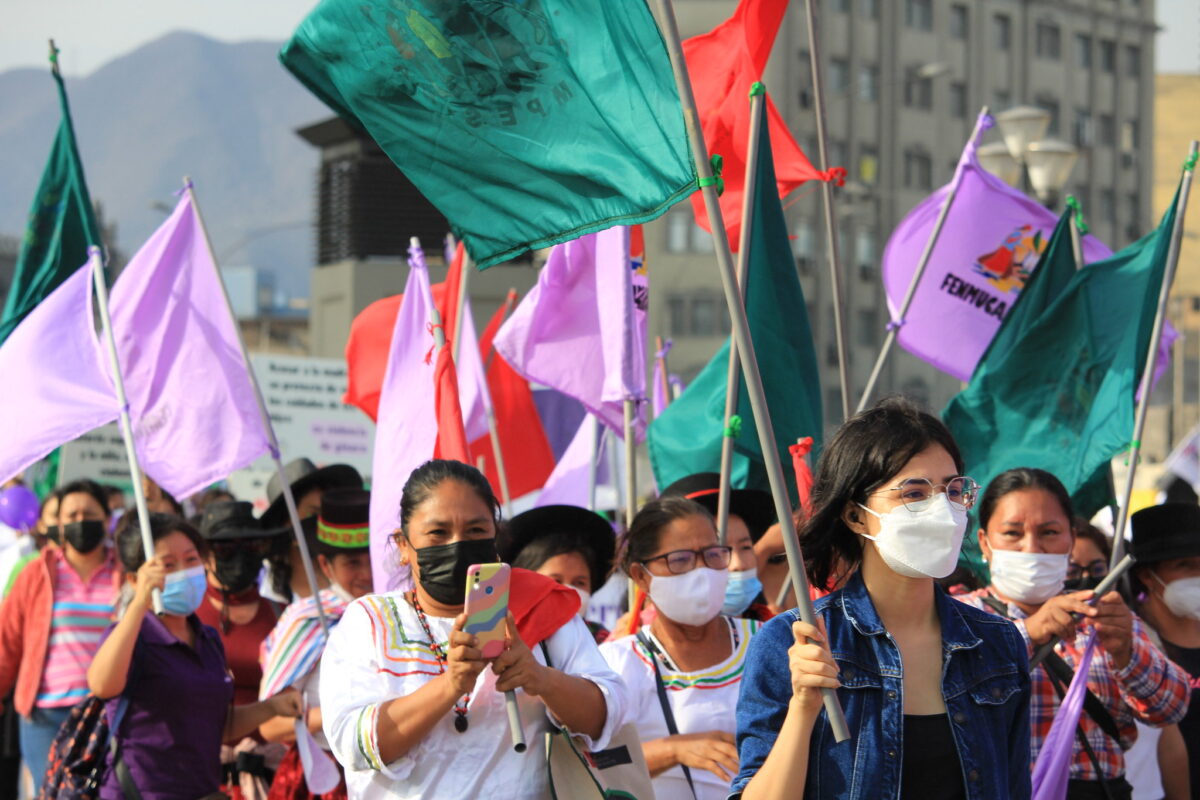
Thousands of women, in every corner of Latin America, are taking to the streets to demand their rights, and are determined to transform their circumstances: they set up shelters in their own homes to take in abused women, establish libraries to bring books to children who lack access to school, contribute their savings to form community banks, devote their time to searching for girls kidnapped by human traffickers, and take to the streets en masse to demand the right to abortion. While doing all this, they also challenge power dynamics. However, despite their efforts and commitment, local philanthropic organizations do not take these initiatives into account and neither support nor fund them.
It is disheartening to see time and again how women, in creating different forms of “community philanthropy,” must generate their own resources through volunteer work and their own contributions, which leads to work overload, instability, and fewer opportunities for sustainability. Meanwhile, women with purchasing power and the philanthropic ecosystem in general (with honorable exceptions) remain seated in their velvet armchairs.
How can we change this situation and encourage foundations and companies to invest more and better resources not only in “women’s” and “women-led” philanthropy but, above all, in women’s rights and feminist organizations?
First, we believe it is necessary to better understand the complexities and challenges faced by women and feminist organizations, as well as to identify the reasons why “donors” do so little to advance the movement. Generating appropriate knowledge is key to developing a better strategy for potential change. Preliminary findings from the research currently being conducted by ELLAS (Uruguay) in collaboration with Comunalia (Mexico) on “Women, Rights, and Philanthropy in Latin America and the Caribbean” highlight significant gaps in corporate and individual philanthropy1. International funding trickles in and is directed primarily toward large organizations such as women’s funds, which play a fundamental role in supporting feminist organizations. However, hundreds of small-scale activists, community organizations, collectives, and informal groups remain off the radar. Paradoxically, it is here, at the base of the pyramid, where fundamental changes take place.
Second, we must encourage traditional philanthropic organizations to change the way they work with women, including by integrating a gender perspective and intersectionality. Investing more resources in women and girls—if not done correctly—is not enough to advance women’s rights. Philanthropic organizations, particularly donors, must change their own practices and incorporate a gender lens into all their structures and programs.
Gender mainstreaming has been adopted internationally as a strategy to achieve gender equality. It involves integrating a gender perspective into the preparation, design, implementation, monitoring, and evaluation of policies, regulatory provisions, and budgets, with the aim of promoting equality between women and men and combating discrimination2.
For example, organizations should review the composition of their board of directors, their mission and vision, their human resources policies, the way they design their strategies, and, of course, their resource allocation and investment plans. This is already being done in some countries outside of Latin America. To encourage our local donors to move in this direction and to assist those who wish to embark on this urgent journey, we will soon launch a handbook on incorporating a gender perspective into Latin American philanthropy and a special toolkit for community foundations in Mexico.
Although women’s philanthropy is on the rise worldwide, this does not mean that women’s rights are following the same path. The history of Latin America shows us that women have always played a leading role in the field of philanthropy, but it is also well known that their actions have been conservative, paternalistic, and, for the most part, religiously oriented. The rise and growing visibility of a wide variety of feminist movements is changing that tradition, shifting the focus from a charitable approach to women’s issues to a human rights perspective on women. A central concept incorporated by this next-generation feminism is intersectionality.
Intersectionality is a framework for conceptualizing a person, a group of people, or a social issue as affected by multiple forms of discrimination and disadvantage. It takes into account people’s overlapping identities and experiences to understand the complexity of the prejudices they face.
In other words, the theory of intersectionality holds that people are often harmed by multiple sources of oppression: their race, class, gender identity, sexual orientation, religion, and other aspects of their identity. Intersectionality recognizes that identity traits (for example, “woman” and “Black”) do not exist independently of one another, and that each informs the others, often creating a complex convergence of oppression3.
Both concepts—gender mainstreaming and intersectionality—are key to the development of women-centered philanthropy and feminist activism. A gender-mainstreaming approach will undoubtedly help increase donations in the region by broadening the donor base, not only among traditional grantmaking foundations but also horizontally at the community level. An intersectional framework for philanthropy will work toward the same goal, as it will broaden the scope of feminist movements by including groups, sectors, and issues that were previously considered separately, such as racism and the environment, among others4.
To support this vibrant movement, ELLAS recently created the Latin American School of Feminist and Community Philanthropy5.
We firmly believe that by working simultaneously on the supply side (donors) and the demand side (feminist organizations and movements), we are helping to create the conditions to bridge a gap in the Latin American philanthropic ecosystem and, as a result, contribute to more equitable and just societies.
References
- https://www.ellasfilantropia.org/single-post/comenz%C3%B3-el-proyecto-de-investigaci%C3%B3n-mujeres-g%C3%A9nero-y-filantrop%C3%ADa-en-am%C3%A9rica-latina-y-el-caribe
- https://eige.europa.eu/gender-mainstreaming/what-is-gender-mainstreaming
- https://www.ywboston.org/2017/03/what-is-intersectionality-and-what-does-it-have-to-do-with-me/
- Feminism Is Philanthropy: Reflections on Latin America and the Caribbean. Florencia Roitstein and Andrés Thompson, ELLAS—Women and Philanthropy, January 2022. https://www.ellasfilantropia.org/_files/ugd/c4d5a2_7e5e5689c4874eaf9df54f194d51b388.pdf
- https://www.ellasfilantropia.org/escueladefilantropia
Authors
Florencia Roitstein is the Director of ELLAS – Women and Philanthropy in Latin America. She is a professor at the University of San Andrés in Argentina and works as a consultant for international organizations and national and multinational companies at the intersection of environmental sustainability, gender equity, and economic development. She served as program officer for Latin America and the Caribbean at the International Planned Parenthood Federation/WHR in New York and as undersecretary of state for sustainable development in Argentina.
Andrés Thompson works as an independent consultant based in Colonia del Sacramento, Uruguay. He co-leads the ELLAS program—“Women and Philanthropy in Latin America”—as a senior advisor. He served as director of programs for Latin America and the Caribbean at the W.K. Kellogg Foundation in Battle Creek, Michigan (1994–2010) and as head of the Brazil office of streetfootballworld. He also served as Executive Coordinator of the Brazilian Network of Social Justice Funds and as Coordinator of Institutional Relations for the Colonia Region Fund in Uruguay.