Framework for Community Philanthropy
June 12, 2022
Vital Signs: Punta de Mita 2022
June 15, 2022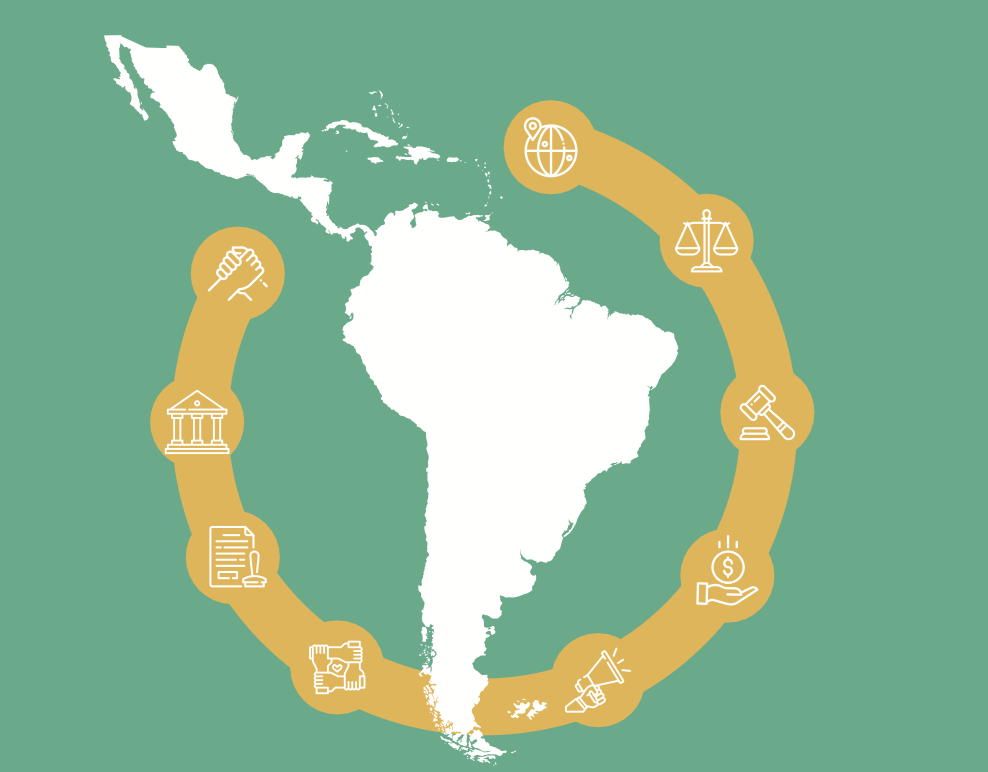
Philanthropy in Latin America and the Caribbean is at a critical juncture: while local philanthropy is establishing itself as a key player in advancing the common good in society, civic space and the enabling environment for philanthropy and the nonprofit sector are shrinking. If the nonprofit sector does not have a favorable environment in which to operate, the work we do in various sectors—such as philanthropy and international cooperation, among others—will not have the desired impact. If countries do not have regulations that facilitate donations, philanthropy cannot grow.
To analyze the complex landscape of philanthropy in the region, WINGS, the Center for Philanthropy and Social Investment at the Adolfo Ibáñez University School of Government (CEFIS UAI), and the Lilly Family School of Philanthropy at Indiana University recently released a report titled Rules and Incentives: Mapping the Legal Framework for Nonprofit Organizations and Philanthropy in Latin America and the Caribbean. The study analyzes the legal frameworks of 19 countries to determine whether they facilitate or hinder philanthropic activities. In general, regulations governing nonprofit organizations and civil society are too rigid and have not evolved in step with the sector’s maturation.
On May 3, 2022, during the online launch of the report, WINGS, CEFIS UAI, and the Lilly Family School of Philanthropy met with experts from the Association of Family and Corporate Foundations (AFE), the Mexican Center for Philanthropy (Cemefi), the Group of Foundations and Companies (GDFE), and the Institute for the Development of Social Investment (IDIS) to discuss the findings and what they mean for the region.
The keynote speaker from Indiana University’s Lilly Family School of Philanthropy provided a global perspective and shared the results of its Global Philanthropic Environment Index (GPEI), which assesses the environment conducive to philanthropy. He showed that Latin America’s overall score is 3.17 out of 5—one of the lowest in the world, behind only the Middle East and North Africa—while the Caribbean scored 3.78. These scores reflect the reality of the region, as described by the speakers throughout the event.
The presentations focused on the difficulties facing the region. A CEFIS member summarized the main challenges facing nonprofit and philanthropic organizations:
- The lengthy process of registering a nonprofit organization (which can take anywhere from 30 days to 6 months).
- The high costs, which can reach $500.
- Limitations on the permitted purposes for the legal registration of a nonprofit organization.
- The requirement to submit detailed annual reports does not vary based on the size or capacity of the organization.
- The lack of tax incentives for donations.
- The limited or nonexistent regulation of electronic donations.
The study also shows that, in some countries, the shrinking of civic space is a threat that manifests itself through legal restrictions and other limitations on the operations of nonprofit organizations. In recent years, many governments in Latin America and the Caribbean have distanced themselves from civil society and are currently cracking down on its work, as seen in Brazil, Mexico, and Venezuela. In these situations, philanthropy needs to build alliances, work collaboratively, and act as a bridge between polarized voices.
How can philanthropy influence changes in regulations?
During the panel discussion, the speakers agreed that the first step in charting a new course for philanthropy is to learn from the experiences of other countries in the region and to organize the information that already exists.
The comparative data provided by the study support the efforts that the philanthropic sector, civil society, and the nonprofit sector are making to improve laws in their countries. Participants are encouraged to use the data, identify how nonprofit organizations are overcoming the obstacles posed by restrictive legislation, learn from others in the philanthropic sector, and collaborate.
Learning from others involves recognizing and engaging with various stakeholders, such as grassroots social movements. According to the speakers, the role of philanthropy is to engage in dialogue with these movements, understand their demands, and work with them to identify ways to collaborate in advocating for a more conducive environment for everyone and protecting democracies.
Philanthropic organizations can be agents of change by supporting or leading national dialogues and raising awareness at the regional and global levels. In addition to including and representing voices that are excluded from traditional philanthropic structures, the sector must develop systems of transparency and accountability, build trust among diverse stakeholders, and promote multisectoral collaboration. The call is for the private sector, nonprofit organizations, the philanthropic sector, civil society, and governments to join forces and work together toward a more conducive environment.
Finally, the report offers recommendations for creating conditions that will help philanthropy thrive:
- Promote more transparent and streamlined registration and oversight processes for nonprofit organizations—ones that are neither costly nor time-consuming and that do not undermine their autonomy.
- Open up cross-border donations. According to the GPEI, cross-border donations are one of the key factors driving the growth of philanthropy.
- Encourage donations by offering tax incentives for all social causes, including reproductive rights, gender identity, indigenous cultures, and the environment—which are often excluded.
- Develop legislation that supports the creation of mechanisms for donations and funds.
- Promote knowledge sharing and learning at the regional level. Studies such as the Global Philanthropic Environment Index (GPEI) and Rules and Incentives: Mapping the Legal Framework for Nonprofit Organizations and Philanthropy in Latin America and the Caribbean are vital for the region. Only by working together can the philanthropic sector strengthen its role, include new voices, and successfully engage with governments to create a more enabling environment.
– – – – – – – – – – – – – – – – – – – – – – – – – – – – – – – – – – – – – – – – – – – – – – – – – – – – – – – – – – – – – – – –
Maria Eugenia Páez G. is the Project Coordinator for Latin America and the Caribbean at WINGS, and Naira Bonila is the Communications Officer at WINGS.
For more information, please contact info@wingsweb.org
This article was originally published in English on the Alliance for Philanthropy and Social Investment Worldwide at (https://www.alliancemagazine.org/blog/philanthropy-in-latin-america-and-the-caribbean-engaging-with-governments-and-including-new-voices/). The translation was done independently of Alliance.